
| August 24, 2026
Determination of Carbendazim in Suspension Concentrates by
High-Performance Liquid Chromatography (HPLC)
Determination of Carbendazim in Suspension Concentrates by High-Performance Liquid Chromatography (HPLC)

AUTHORS |Parra, J.; Matamoros, O.; Barrantes, D. Formulaciones Químicas S.A.: Puntarenas, Costa Rica.
ABSTRACT
INTRODUCTION
Carbendazim, C9H9N3O2 or methyl 1H-benzimidazol-2-yl carbamate (MBC),CIPAC 263, is a broad-spectrum systemicfungicide widely used to control variouspathogens in agriculture. Its most frequentapplication is as a post-harvest treatmentfor the control of pathogenic fungi infruits, vegetables, ornamental plants, andgrasses. This molecule is commonlyformulated as suspension concentrates(SC), given its chemical nature that allowsit to disperse easily in water with the aid ofhigh-HLB surfactants. The determinationand regulation of this substance areessential, as oral exposure can lead to itsdecomposition into secondary metabolitessuch as 5-hydroxy-2-benzimidazolecarbamate (5-HBC), which exhibitsmutagenic and endocrine-disruptingeffects in mammals.
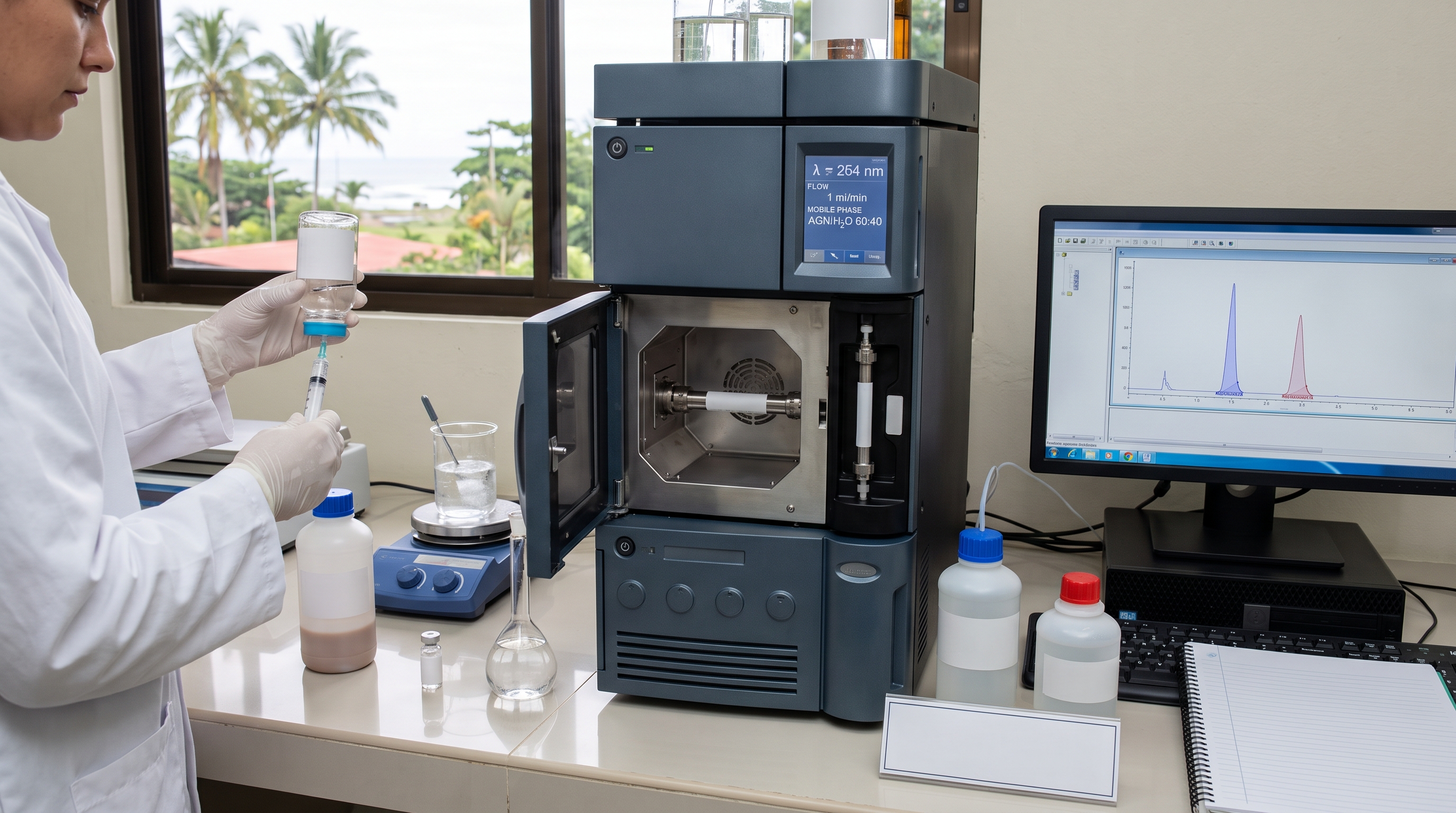
Quantitative determination of thiscarbamate by gas chromatography (GC)presents significant difficulties due to itsthermal degradation and columnadsorption phenomena. On the other hand,direct spectrophotometric techniquesfrequently lack the necessary specificity inthe presence of the degradationsubproducts. Consequently, reversed-phase HPLC is selected as the optimalalternative due to its ability to operate atroom temperature and its high resolution.