ABSTRACT
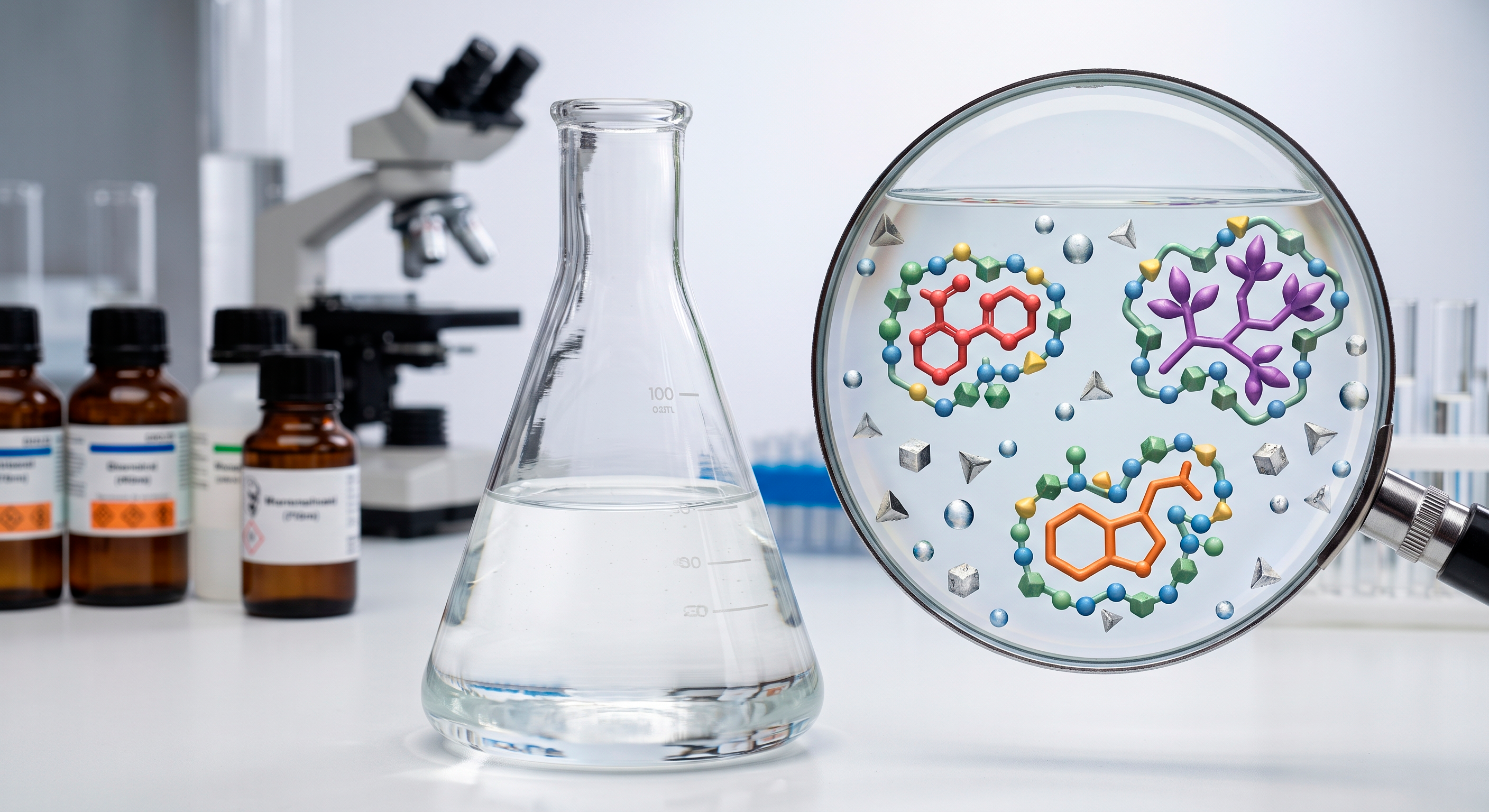
Modern agricultural productivity depends on the efficient use of Plant Growth Regulators
(PGRs). However, phytohormones such as auxins, gibberellins, and cytokinins present
significant formulation challenges due to their limited water solubility and susceptibility to
hydrolysis in aqueous media. This article describes the development and scientific rationale
of a non-aqueous concentrate containing three phytohormones (cytokinins, GA3, and
IBA/IAA), stabilized through a ternary solvent matrix. The invention is based on
manipulating the dielectric constant (ε) of the medium by employing a three-solvent system
with distinct polarities (low, intermediate, and high), thereby broadening the range of
intermolecular interactions and ensuring a favourable solvation environment for each
synthetic plant hormone.
INTRODUCTION
Plant Growth Regulators (PGRs) are
organic compounds that, at very low
concentrations, can modify or partially or
completely inhibiting the physiological
development of plants. Unlike nutrients,
these molecules function as chemical
messengers that activate or repress specific
genes, coordinating processes ranging
from seed germination to fruit maturation.
Modern biotechnology has established
these substances as valuable tools for
improving crop productivity and quality
by regulating the production of secondary
metabolites and optimizing harvest timing.
From a technical standpoint, a plant
hormone (phytohormone) is synthesized
naturally by the plant, whereas plant
growth regulators are synthetic analogues,
often exhibiting greater biological activity,
that mimic the physiological functions of
their corresponding endogenous
phytohormones. The effectiveness of these
compounds depends on both the
application rate and timing, but more
importantly on the formulation’s ability to
maintain the active molecule in a stable,
bioavailable form throughout the
application process. The biosynthesis and
stability of these hormones are highly
sensitive to environmental conditions such
as pH and water availability, factors that
likewise influence the efficacy of
exogenously applied plant growth
regulators.
Share on your social media
Share on your social media